
TOOLS

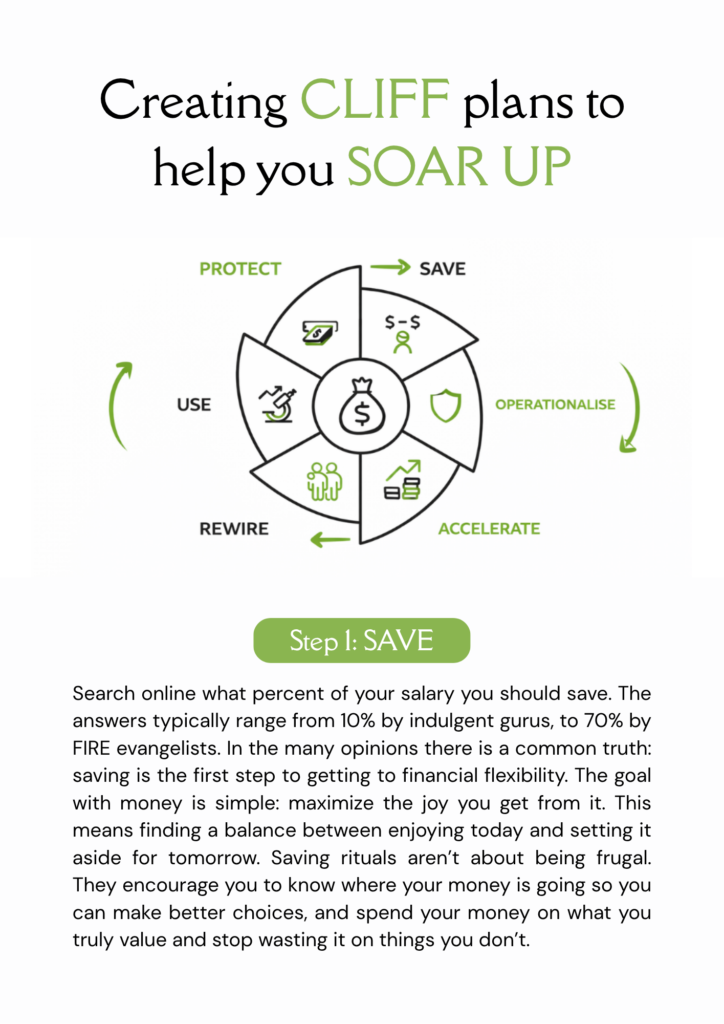
Search online what percent of your salary you should save. The answers typically range from 10% by indulgent gurus, to 70% by FIRE evangelists. In the many opinions there is a common truth: saving is the first step to getting to financial flexibility. The goal with money is simple: maximize the joy you get from it. This means finding a balance between enjoying today and setting it aside for tomorrow. Saving rituals aren’t about being frugal. They encourage you to know where your money is going so you can make better choices, and spend your money on what you truly value and stop wasting it on things you don’t.

This step starts with the question of how much. Calculating ‘the number.’ The simple arithmetic of freedom to set your target. Then the work starts. An active plan that grows what you saved. It dismantles the little, nagging doubts that slow you down. With examples that show you ways to build an engine where investment gains add fuel to your annual savings and create a loop that gets you to your point of financial flexibility faster.

This step is about amplifying returns so you shrink the time to reach financial flexibility. Modern finance is built on tools that are less than fifty years old: there are newer options to explore. Accelerators that may be riskier but can work wonders. This isn’t for everyone. For many, the only true accelerant is save more and put it to work. The traditional way. But if this fits your mental model, this step lays out mechanisms like ‘good debt’ to give returns a boost. And it show you ways to reduce the additional risk these strategies bring.

As the traditional concept of retirement gets replaced by a series of breaks, turns and restarts, it will shift to re‘wire’ment. This step focuses on reassessing and adapting. It encourages experimentation, making bets within reason. Each comes with financial implications. Not all will work. Hitting reset, learning, and evolving will need to be a natural skillset for a longer life. Perhaps the most important one for amazing CLIFF plans.

This is about the finish line. When you start consuming more than you earn from work. The industry calls this decumulation or drawdown—clinical, cold words that hide the truth: this is a major behavioral shift that often causes intense anxiety. Turning the savings switch off and the spending switch on can feel like a betrayal. People feel a profound sense of loss every time they tap into the pile, even though it was built for that exact purpose. You need a resilient system to handle decades with recessions, booms, and inflation. The last thing you want is the regret of having succeeded at saving, but failing at living.

Curveballs are inevitable in a long life. The only thing certain is extreme uncertainty. While you can’t prevent every unexpected event or assumption shift, you can cushion the fall. This is where safety nets and shields come in. All long-term plans must create margins of safety. Where big jolts can be absorbed and their financial impacts smoothened. Creating peace of mind to enjoy your long and precious life.

FAQs

Frequently Asked Questions

No. CLIFF is designed for everyday people. You don’t need any prior knowledge to start.

It focuses on mindset first, not just numbers—making it practical, relatable, and easier to apply.

Neither. Whether you're in your teens or your 50s, the principles apply to every stage of life.

No. CLIFF shows how effective investing can be simple, consistent, and even “boring.”

To help you achieve financial flexibility—not just someday, but throughout your life.

Newsletter