Musk, Abundance and Retirement Planning
Elon Musk is wrong about personal finance. But I so want him to be right.
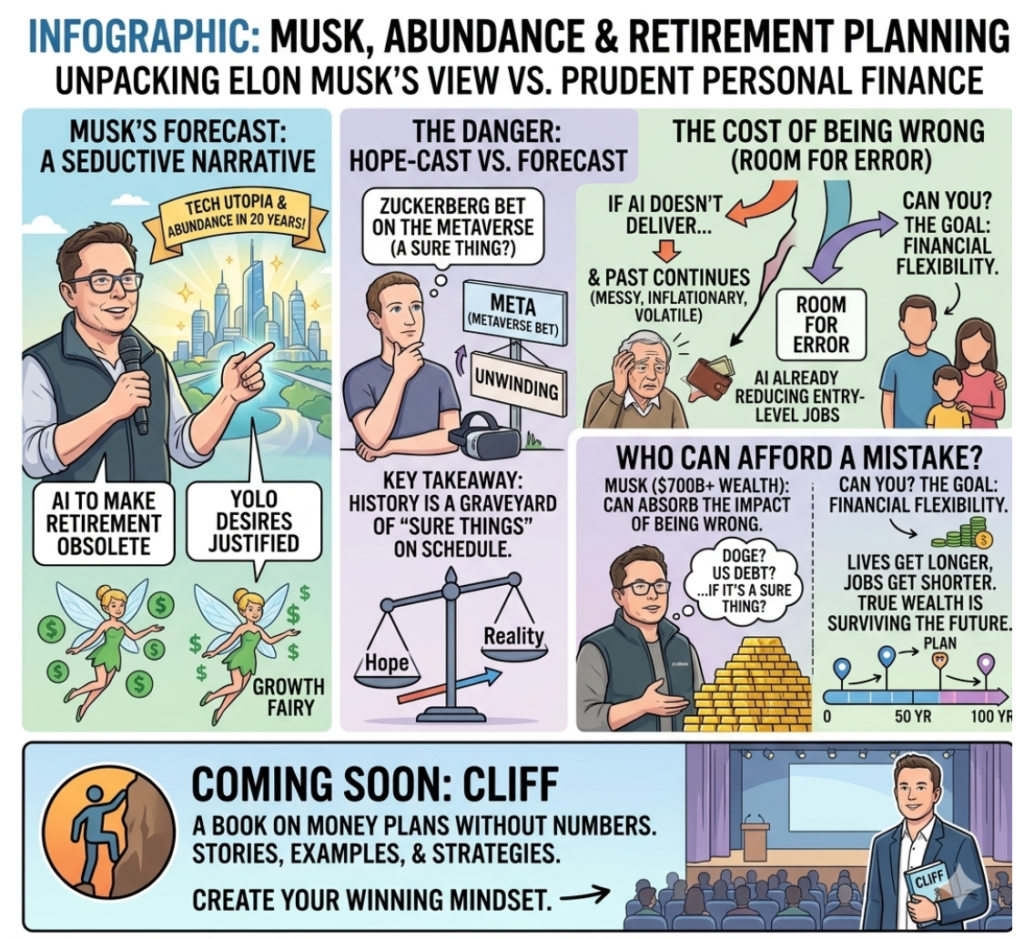
Musk recently suggested that in twenty years, AI will usher in a ‘tech utopia’ so profound that saving for retirement will be a relic of the past.
It is a seductive narrative. We humans love the idea of a ‘Growth Fairy’ arriving to solve our messy problems. The prospect of the world’s richest man justifying our YOLO (You Only Live Once) desires is very appealing.
But there is a massive difference between a forecast and a hope-cast.
In investing, the most important part of every plan is the part for when things aren’t going according to plan. I call this the Room for Error. Musk’s view assumes a 100% success rate for a specific technological outcome. But history is a graveyard of ‘sure things’ that never arrived on schedule. As Zuckerberg can attest. He bet on the Metaverse so much so he changed the name of the company. Now he is quickly unwinding that bet.
The danger is the cost of you being wrong.
The same AI that can herald in this utopian abundance is already compressing careers and reducing the need for entry-level jobs. If you stop planning your money for your future and it ends up looking quite like the past – messy, inflationary, and volatile – you would be in deep trouble.
Someone with more than $700B in personal wealth is right much of the time. But he can also absorb the impact of being wrong. The question is… can you?
Think for a moment. If Musk’s assessment was such a sure thing, did he need to try to eke out every last cent in DOGE? Or obsess about the ballooning US debt? After all, that upcoming abundance, just a couple decades away, could wipe it all out.
True wealth isn’t about predicting the future; it’s about being able to survive it.
The goal of financial flexibility is to buy yourself financial flexibility so you live your life on your terms. As jobs get shorter and lives are longer, don’t bet your 100-year life on a Silicon Valley miracle.